SUPPORTING TRANSITION THROUGH MENTORING
Home » Sustainability » Social Sustainability » Supporting transition through mentoring
Supporting transition through mentoring: Landmarc, SSAFA and the impact on people
Leaving the Armed Forces can be one of the most uncertain periods in a person’s life, bringing questions around housing, employment, finances and what comes next. For some, that uncertainty builds quickly, especially when several challenges come at once.
Through SSAFA, the Armed Forces charity’s mentoring service, fully trained, knowledgeable and trusted volunteers provide one-to-one support during this time.
Landmarc has partnered with SSAFA since 2019, combining Landmarc’s enablement with SSAFA’s professional framework. Together we have built two routes into mentoring: an employer pathway that supports employees to volunteer and an employee pathway where SSAFA equips, trains and oversees volunteers to deliver safe, effective mentoring. Landmarc has also funded the annual mentoring conferences and training, strengthening employees’ listening, communication and supportive leadership skills, while delivering social value. Landmarc mentors now help deliver the service directly, contributing over 350 hours of support.
Mentoring does not follow a fixed structure, and it can be difficult to capture in simple outcomes. Its value comes through a strong relationship between mentor and mentee: trust built over time, clear boundaries, and a consistent space to talk openly. From that foundation, people can explore what comes next in a way that suits them.
In practice, this means a weekly commitment, over several months. Mentors check in, listen without judgement, and use thoughtful questions to help mentees make sense of their options at their own pace. Support may focus on work, housing, confidence or simply gaining a clearer sense of direction, by setting goals to support the mentees focus we empower them to take the next steps.
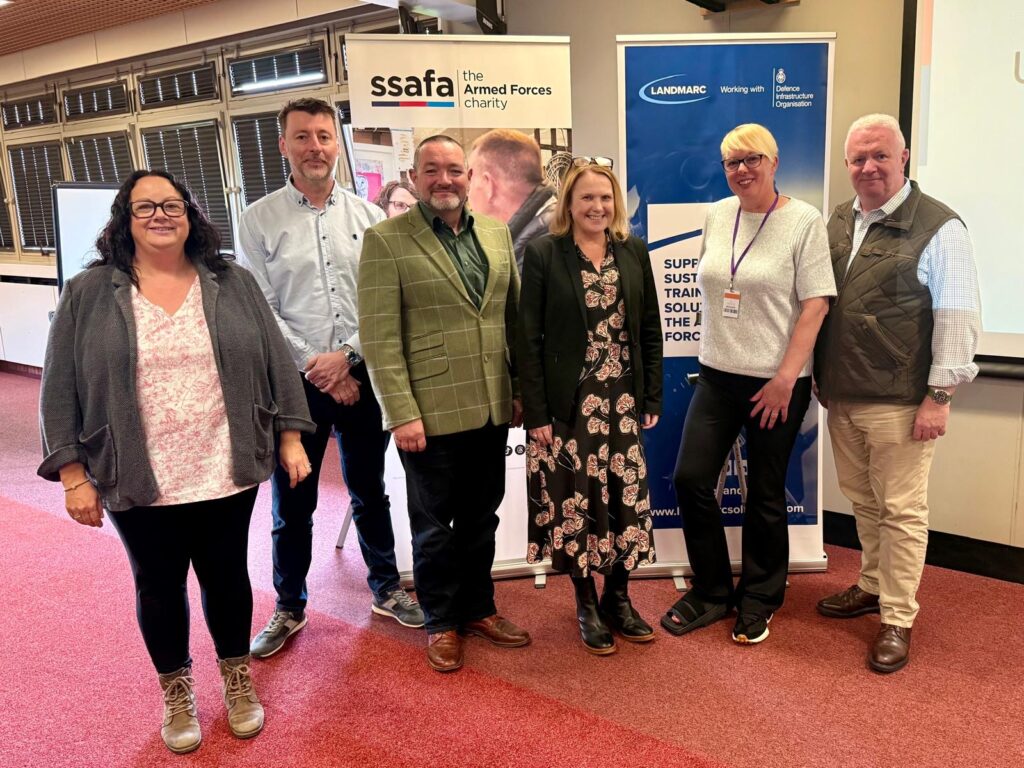
Landmarc has a strong connection to the Armed Forces community, with many employees having military backgrounds or close links to service life.
This has shaped a long-term approach to supporting people through transition.
Partnerships work best when there is a shared vision: in this case, our vision is that no one should navigate transition alone. Landmarc provides the enablement time, encouragement and internal backing so employees can step forward, while SSAFA provides the professional framework, safeguarding and ongoing support that allows mentors to volunteer with confidence.
This means that Landmarc employees are now at the heart of delivering this support. They work one-to-one with individuals, often over extended periods, building relationships that last for months and helping people work through complex and personal challenges.
For Vicky, a Landmarc employee and mentor, the experience has been both challenging and rewarding.
“You have to dig deep,” Vicky says. “It can feel uncomfortable sometimes, because it’s real life. But that’s what makes it meaningful.”
When Vicky first got involved, she wasn’t sure how she would handle the role in practice. Over time, through the training and the relationships she has built, she has become more confident in how she approaches it. What began as uncertainty has become a source of pride and personal growth, demonstrating the transformative impact of the programme for those delivering as well as receiving support.
Mentoring has challenged her to step outside her comfort zone and approach conversations in a different way. Rather than trying to provide answers, she has learned to listen more, ask better questions and give people the space to work things through for themselves.
For her, the experience is simple.
“It’s a privilege.”
Other Landmarc mentors describe similar experiences.
Mike, a Landmarc mentor, has supported Ollie, a veteran recovering from a traumatic brain injury following a violent attack and medical discharge. Over 14 months, regular walks and conversations have created a safe, trusted space to process what happened and rebuild confidence.
As a result, Ollie has taken practical steps towards independence—managing day-to-day responsibilities, engaging more openly with others and regaining a sense of control over his future.
As one beneficiary put it, “my mentor stopped the ground from falling away.”
“The reward is seeing someone grow in confidence and independence when they’re going through a difficult time.”
“When you’re mentoring someone, you sometimes see a real release of emotion,” says Mike. “Being a sounding board can make a huge difference.”
That experience has stayed with him beyond mentoring, shaping how he communicates in his own life.
For Landmarc mentor, Andrew, the impact has also been personal.
“I’m a much better listener now. It’s less about telling someone what to do and more about helping them find their own solutions.”
Together, these experiences show what mentoring looks like in practice. It’s built on trust, consistency, and time. It is not something that can be standardised, and its impact is not always obvious at first, but it plays an important role in helping people move forward.
Through its partnership with SSAFA, Landmarc continues to support the mentoring service in various ways. This means support is not only funded but delivered by people within the organisation.
Karen Porter, Head of Communications and Engagement and Social Value Lead at Landmarc added, “Many of our colleagues understand first hand the realities of military life and the uncertainty that can accompany transition. Mentoring provides an opportunity to give something back in a very personal way. Sometimes the greatest impact comes not from having all the answers but simply from being there to listen, encourage and help someone take their next step forward. We feel privileged to play a small part in making that support possible through our partnership with SSAFA.”
While the outcomes of mentoring are not always visible, the impact is seen in the confidence people build, the decisions they are able to make and the stability they are able to achieve as they move forward.
That support Landmarc helps SSAFA deliver comes at a point where the right conversation can stop things from becoming more difficult, making sure those returning to civvy street never battle alone.